Are you looking for the latest FESCO peak hours 2026 to manage your electricity consumption and reduce your monthly electricity bill? Understanding peak and off-peak hours can help you plan your daily electricity usage more efficiently and make better use of your home appliances.
FESCO (Faisalabad Electric Supply Company) supplies electricity to consumers across Faisalabad and several surrounding areas. Electricity consumption patterns can affect your monthly bill, particularly if your connection uses a Time of Use (TOU) meter.
In this guide, you will learn about FESCO peak hours 2026, the difference between peak and off-peak timings, how electricity usage affects your bill, and practical ways to manage your household energy consumption.
What Are FESCO Peak Hours?
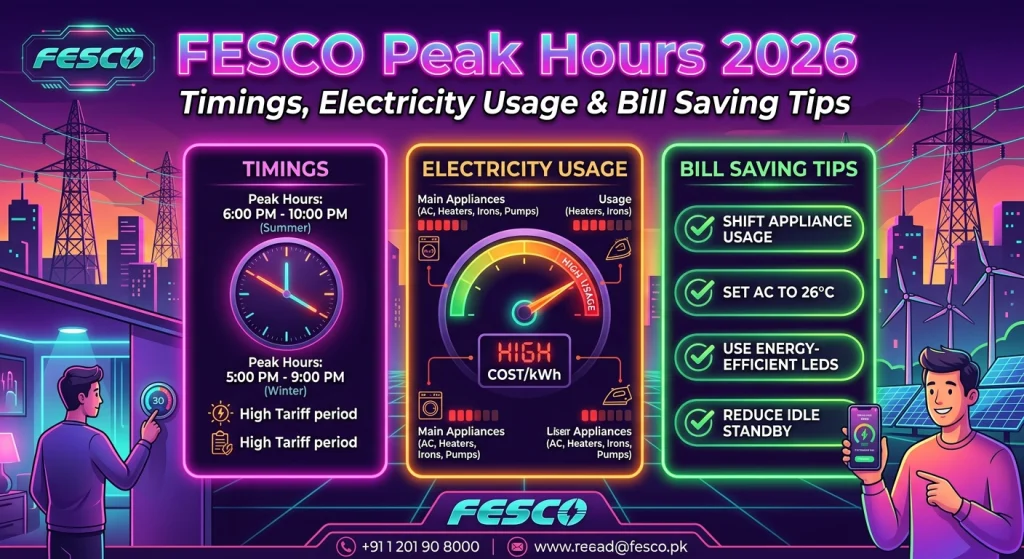
FESCO peak hours are specific periods when electricity demand across the power system is generally higher. During these hours, electricity consumption from homes, businesses, and industries can place additional pressure on the electricity network.
For consumers with applicable Time of Use (TOU) meters, electricity units consumed during peak hours may be charged at a different rate from units consumed during off-peak hours.
Understanding peak-hour timings can help you plan when to operate energy-intensive appliances, especially if your electricity tariff includes different peak and off-peak rates.
Official FESCO Peak Hours and Electricity Tariff Information
For the latest information about FESCO peak hours 2026, electricity tariffs, and peak and off-peak rates, consumers should consult official electricity authorities. The National Electric Power Regulatory Authority (NEPRA) publishes electricity-related regulatory information, while FESCO provides consumer services and company updates.
FESCO Peak Hours 2026 – Timings
FESCO consumers with applicable Time of Use tariffs should check the current peak-hour schedule and tariff information issued by the relevant electricity authorities.
The peak-hour schedule commonly used for domestic TOU consumers in Pakistan has historically followed seasonal timings. The following table is a general reference, not a verified confirmation of the current 2026 schedule.
| Season | Commonly Referenced Peak Hours |
|---|---|
| December to February | 5:00 PM – 9:00 PM |
| March to May | 6:00 PM – 10:00 PM |
| June to August | 7:00 PM – 11:00 PM |
| September to November | 6:00 PM – 10:00 PM |
Important: Peak-hour timings and applicable tariffs can change through official notifications. Check your latest FESCO bill and the current tariff schedule from
NEPRA’s official website
or
FESCO’s official website
before relying on these timings for 2026.
FESCO Peak Hours vs. Off-Peak Hours
Understanding the difference between peak and off-peak hours is useful for consumers whose electricity meters record usage separately by time.
Peak Hours
- Periods of higher electricity demand.
- May have a higher per-unit rate under applicable TOU tariffs.
- Often coincide with increased household and commercial electricity usage.Off-Peak Hours
- Periods outside the designated peak-hour window.
- May have a lower per-unit rate under applicable TOU tariffs.
- Offer an opportunity to shift flexible electricity usage to other times.
Keep in mind that off-peak hours do not necessarily mean electricity is free or that every FESCO consumer receives a lower rate during those periods. Your applicable tariff and meter type determine how your electricity usage is billed.
Why Are FESCO Peak Hours Important?
Knowing the FESCO peak hours 2026 can help you make informed decisions about your electricity consumption.
Here are some key reasons to understand peak-hour timings:
- Better electricity planning: Schedule flexible household activities around your applicable tariff.
- Potential bill savings: TOU consumers may reduce costs by shifting some electricity usage to lower-rate periods.
- Efficient appliance use: Manage the operation of washing machines, water pumps, and other energy-intensive equipment.
- Improved energy awareness: Understand when and how your household consumes electricity.
- Better monthly budgeting: Track electricity consumption and identify opportunities to manage expenses.
The actual savings depend on your tariff, appliance consumption, and how much electricity you can reasonably shift outside peak hours.
How to Reduce Your Electricity Bill During FESCO Peak Hours
Managing electricity consumption during peak hours can help eligible TOU consumers control their electricity expenses. Even if your connection uses a standard tariff, reducing unnecessary electricity usage can help lower overall consumption.
Here are some practical tips.
1. Use Heavy Appliances During Off-Peak Hours
If your electricity tariff has different peak and off-peak rates, consider shifting flexible activities to off-peak periods.
For example:
- Run your washing machine outside peak hours.
- Operate water pumps at suitable off-peak times.
- Schedule other flexible electricity-consuming activities outside the peak window.
Always consider household needs and equipment safety when planning appliance use.
2. Use Air Conditioners Efficiently
Air conditioners can consume a significant amount of electricity, particularly during hot weather.
You can manage their electricity consumption by:
- Setting a comfortable temperature.
- Cleaning air filters regularly.
- Keeping doors and windows closed while cooling.
- Using fans where appropriate.
- Switching off cooling when it is not needed.
Efficient air conditioner use can reduce electricity consumption throughout the day.
3. Switch Off Unnecessary Lights
Lighting is another area where small changes can make a difference.
Consider these simple practices:
- Switch off lights in empty rooms.
- Use energy-efficient LED bulbs.
- Make better use of natural daylight.
- Avoid leaving unnecessary lights switched on overnight.
These habits can reduce avoidable electricity usage.
4. Avoid Running Multiple Heavy Appliances Together
Using several high-power appliances at the same time can increase your household’s electricity demand.
Where practical, spread flexible activities across different times of the day. This can help manage your household’s electricity load and may be especially useful for TOU consumers.
5. Choose Energy-Efficient Appliances
Energy-efficient appliances can help reduce electricity consumption over time.
When purchasing new equipment, consider:
- Energy-efficiency ratings.
- Electricity consumption information.
- Appliance size and household requirements.
- Maintenance and operating costs.
Compare the energy labels and specifications before making a purchase.
6. Monitor Your Monthly Electricity Consumption
Review your FESCO electricity bill every month to understand your consumption patterns.
Pay attention to:
- Total electricity units consumed.
- Peak and off-peak units, if shown.
- Previous month’s consumption.
- Applicable tariff information.
- Additional bill components.
Regular monitoring can help you identify changes in electricity usage and adjust your habits accordingly.
7. Use Appliances Only When Needed
Avoid unnecessary operation of high-power appliances.
For example, switch off unused fans, lights, and other equipment. Make sure appliances are maintained according to their manufacturer’s recommendations.
Small changes in everyday electricity use can add up over a complete billing cycle.
Who Can Benefit From FESCO Peak and Off-Peak Timings?
Peak and off-peak timing information is especially relevant for consumers whose electricity connections have applicable Time of Use meters.
These may include:
- Households with TOU electricity meters.
- Commercial consumers under applicable TOU tariffs.
- Businesses that can schedule flexible electricity usage.
- Consumers who monitor peak and off-peak units on their electricity bills.
Consumers with standard single-rate meters may not receive separate peak and off-peak billing rates. However, using electricity efficiently can still help them manage their overall consumption.
Frequently Asked Questions About FESCO Peak Hours 2026
What are FESCO peak hours in 2026?
The commonly referenced seasonal peak-hour schedule is 5 PM to 9 PM in December–February, 6 PM to 10 PM in March–May, 7 PM to 11 PM in June–August, and 6 PM to 10 PM in September–November. Confirm the applicable 2026 timings through the latest official tariff information.
What are FESCO off-peak hours?
Off-peak hours are the periods outside the designated daily peak-hour window. For TOU consumers, electricity consumed during off-peak hours may have a different rate from peak-hour electricity.
Are FESCO peak hours the same throughout the year?
No. The commonly referenced schedule changes seasonally. Consumers should check the latest official notifications because the schedule may be revised.
Does using electricity during peak hours increase my bill?
For consumers on an applicable TOU tariff, peak-hour electricity may be charged at a higher rate than off-peak electricity. For other consumers, the billing arrangement may be different.
How can I check my FESCO peak-hour electricity units?
Check the meter readings and billing details on your latest electricity bill. If you have a TOU meter, your bill may show separate peak and off-peak consumption figures.
Can I save money by using appliances during off-peak hours?
If your connection has different peak and off-peak rates, shifting flexible electricity usage to off-peak hours may reduce the energy charges. Actual savings depend on your tariff and consumption.
Are FESCO peak hours applicable to all consumers?
Peak-hour rates are relevant to consumers covered by applicable TOU tariffs. Not every domestic electricity connection is billed using separate peak and off-peak rates.
Where can I find official FESCO peak-hour timings?
You can check the official FESCO website and the
NEPRA website
for applicable tariff information and official notifications.
Final Words
Understanding FESCO peak hours 2026 can help you plan electricity usage, monitor your consumption, and manage your monthly electricity expenses. For consumers with TOU meters, shifting flexible appliance usage to off-peak hours may offer an opportunity to reduce electricity costs.
Use energy-efficient appliances, avoid unnecessary electricity consumption, and review your monthly FESCO bill to understand your usage patterns. Most importantly, verify the current peak-hour schedule and applicable tariff before changing your electricity routine.