FESCO Electricity Bill can increase significantly during the summer months when air conditioners, fans, refrigerators, water pumps, and other appliances are used more frequently. The good news is that you can take several practical steps to reduce electricity consumption without completely changing your daily routine.
In this guide, you will learn how to reduce your FESCO electricity bill in summer 2026, how to use air conditioners efficiently, reduce standby electricity usage, monitor your meter, and avoid unnecessary power consumption. These simple electricity-saving habits can help households manage their monthly bills more effectively.
Why Does Your FESCO Electricity Bill Increase in Summer?
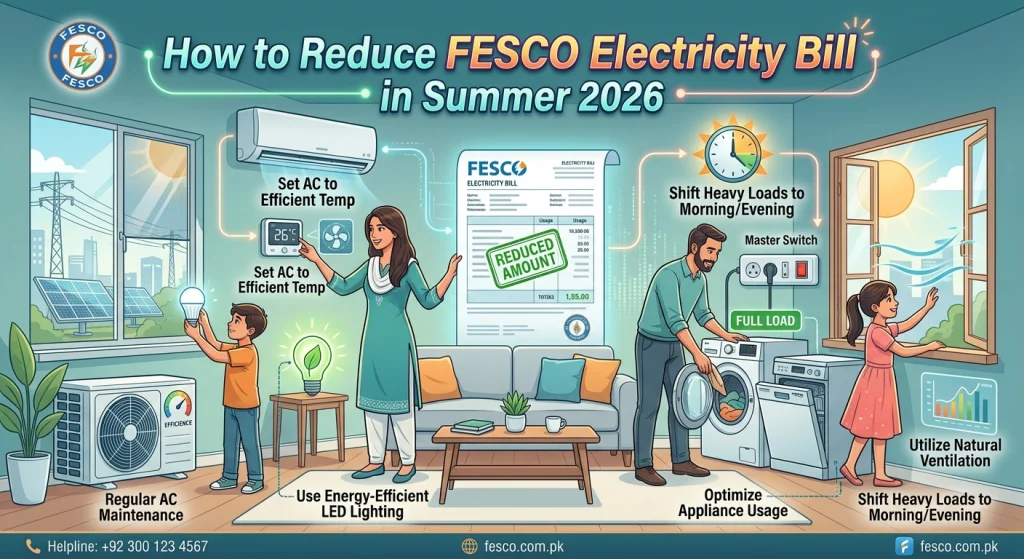
Summer electricity consumption is usually higher because cooling appliances operate for longer periods. An air conditioner that runs for several hours every day can consume considerably more electricity than smaller household appliances.
Common reasons for a higher FESCO Electricity Bill include:
- Frequent use of air conditioners
- Continuous use of ceiling and pedestal fans
- Older refrigerators and freezers
- Excessive use of water pumps
- Electric water heaters
- Inefficient lighting
- Appliances left on unnecessarily
- High electricity consumption during peak periods
- Poor insulation and heat entering the home
- Increased overall household electricity usage
Understanding where your electricity is being consumed is the first step toward lowering your monthly bill.
1. Use Your Air Conditioner Efficiently
Air conditioners are among the biggest electricity consumers during summer. However, you do not necessarily need to stop using your AC to reduce your FESCO Electricity Bill.
Set the temperature at a comfortable level rather than choosing extremely low temperatures. Running an AC at an unnecessarily low temperature can increase energy consumption.
You can also:
- Keep doors and windows closed while the AC is operating.
- Clean AC filters regularly.
- Use curtains or blinds to reduce direct sunlight.
- Avoid leaving the AC running in an empty room.
- Use the timer or sleep function when appropriate.
- Keep the outdoor AC unit free from obstructions.
- Service the air conditioner when its performance decreases.
If you have an inverter AC, using it consistently at a reasonable temperature can help avoid unnecessary cycling and electricity consumption.
2. Use Fans Along With the AC
A ceiling fan can improve air circulation and make a room feel cooler. Instead of relying entirely on a very low AC temperature, you can use the fan to circulate cooled air throughout the room.
When leaving the room, remember to switch off both the AC and fan.
This simple habit can reduce unnecessary electricity usage and help control your monthly FESCO Electricity Bill.
3. Switch to LED Lights
Traditional incandescent bulbs consume more electricity than modern LED lighting.
Replacing frequently used bulbs with LEDs can help reduce lighting consumption. LEDs also generally have a longer operating life, making them practical for regular household use.
During daylight hours, take advantage of natural sunlight whenever possible.
Simple Lighting Habits
- Turn lights off when leaving a room.
- Use daylight instead of artificial lighting during the day.
- Avoid installing unnecessarily bright bulbs.
- Replace frequently used old bulbs with efficient LED alternatives.
These small changes become more meaningful when followed every day.
4. Reduce Refrigerator Electricity Consumption
Your refrigerator operates throughout the day, so its efficiency can affect your overall electricity consumption.
To use it efficiently:
- Avoid opening the refrigerator door unnecessarily.
- Make sure the door seal closes properly.
- Do not place hot food directly inside.
- Keep the refrigerator away from excessive heat.
- Clean and maintain the appliance according to the manufacturer’s instructions.
- Avoid setting the temperature colder than necessary.
A refrigerator with a damaged door seal or poor maintenance may need to work harder to maintain its temperature.
5. Turn Off Appliances When Not in Use
One of the easiest ways to reduce electricity consumption is to switch appliances off when they are not needed.
Check devices such as:
- Televisions
- Computers
- Chargers
- Wi-Fi equipment
- Fans
- Lights
- Kitchen appliances
- Air conditioners
Some electronic devices can continue consuming a small amount of electricity while connected to power. Disconnecting devices that do not need to remain powered can help reduce unnecessary consumption.
6. Use Your Washing Machine Wisely
Washing machines can consume electricity and water, particularly when used frequently.
Try to run the washing machine with appropriately sized loads rather than repeatedly washing very small loads.
Also follow the manufacturer’s recommended settings and maintenance instructions.
Avoid running major appliances unnecessarily during periods when electricity consumption in your home is already high.
7. Reduce Unnecessary Water Pump Usage
Water pumps can consume significant electricity when they operate frequently.
Make sure your water tank, pipes, and taps do not have leaks. A leak can cause the pump to operate more often than necessary.
You should also avoid running the pump longer than required.
A simple household routine for checking water levels and switching the pump off at the appropriate time can prevent unnecessary electricity consumption.
8. Use Solar Energy Where Practical
Solar power can be another option for households looking to reduce their dependence on grid electricity.
A properly designed solar system can generate electricity from sunlight and potentially reduce the amount of electricity purchased from the grid. However, installation costs, available roof space, equipment quality, maintenance, and applicable electricity regulations should be considered before making a decision.
Solar is a long-term investment rather than an instant solution for lowering one month’s FESCO Electricity Bill.
9. Avoid Running Multiple High-Power Appliances Together
Using several high-consumption appliances simultaneously can substantially increase household electricity demand.
Examples include:
- Air conditioner
- Electric iron
- Water pump
- Electric heater
- Washing machine
- Microwave oven
Where practical, schedule appliances according to your household’s needs instead of operating every high-power appliance at the same time.
This also makes it easier to identify which appliances are responsible for higher consumption.
10. Be Careful With Electric Irons
Electric irons can use considerable power during operation.
Instead of ironing one or two garments repeatedly throughout the week, many households find it more practical to iron clothes in batches.
Always turn the iron off immediately after use and never leave it unattended.
Reducing unnecessary operating time can contribute to lower household electricity consumption.
11. Improve Your Home’s Cooling
You can reduce the amount of work your cooling appliances need to do by keeping indoor spaces cooler naturally.
Consider:
- Using curtains during intense sunlight.
- Closing windows during the hottest part of the day when outdoor air is hotter.
- Improving insulation where practical.
- Using reflective curtains or blinds.
- Keeping unnecessary heat-producing appliances away from bedrooms.
- Improving ventilation when outdoor conditions allow.
A cooler room generally requires less cooling effort than a room constantly exposed to direct sunlight.
12. Check Your FESCO Electricity Meter Regularly
Monitoring your electricity meter can help you understand how much electricity your household is consuming.
Record the meter reading periodically and compare it with your previous reading.
If your consumption suddenly increases, investigate possible causes such as:
- Increased AC usage
- New electrical appliances
- Water pump problems
- Refrigerator issues
- Wiring problems
- Changes in household usage
Regular monitoring can help you identify unusual consumption before the next FESCO Electricity Bill arrives.
13. Check Your FESCO Bill Carefully
Don’t simply look at the total amount. Check the important details printed on your bill.
Look for:
- Previous meter reading
- Current meter reading
- Billing period
- Units consumed
- Due date
- Tariff information
- Taxes and other charges
- Any outstanding amount
Comparing your current bill with previous bills can help you understand why the amount has changed.
If your units have increased significantly, compare the increase with your actual household electricity usage.
14. Reduce Electricity Consumption During Peak Hours
Electricity consumption patterns can vary throughout the day. Where possible, avoid unnecessary use of high-power appliances during periods when household demand is already high.
For example, you may be able to schedule certain activities such as laundry or ironing at a different time.
However, your primary goal should remain reducing total electricity consumption, rather than simply shifting every appliance to another time.
15. Maintain Your Electrical Appliances
Poorly maintained appliances can become less efficient over time.
Regularly inspect and maintain:
- Air conditioners
- Refrigerators
- Fans
- Water pumps
- Washing machines
- Other frequently used appliances
Follow the manufacturer’s maintenance recommendations and use qualified technicians for electrical repairs when necessary.
16. Replace Old Appliances When Economically Practical
Older appliances can sometimes consume more electricity than newer, more efficient models.
If an appliance is approaching the end of its useful life and consumes excessive electricity, replacing it with an energy-efficient model may reduce long-term operating costs.
Before buying a replacement, compare:
- Energy efficiency
- Purchase price
- Expected operating cost
- Warranty
- Maintenance requirements
- Capacity and household requirements
Do not replace working appliances solely for electricity savings unless the long-term benefit makes financial sense.
Easy Daily Habits to Lower Your FESCO Bill
You don’t need to make major changes all at once. Start with simple habits:
| Habit | Potential Benefit |
|---|---|
| Turn off unused lights | Reduces unnecessary lighting consumption |
| Switch off fans when leaving | Prevents wasted electricity |
| Use AC at a reasonable setting | Can reduce cooling-related consumption |
| Clean AC filters | Helps maintain efficient operation |
| Limit unnecessary refrigerator opening | Reduces cooling loss |
| Unplug unused devices | Helps reduce standby consumption |
| Monitor meter readings | Helps identify consumption changes |
| Use LED bulbs | Reduces lighting energy use |
| Avoid unnecessary pump operation | Reduces pump consumption |
| Maintain appliances | Helps them operate efficiently |
How to Track Your FESCO Electricity Consumption
A simple consumption record can make it easier to understand your electricity usage.
Write down your meter reading once every few days or at least once a week. Then compare the readings over time.
For example:
| Date | Meter Reading | Difference |
|---|---|---|
| Day 1 | 12,500 | — |
| Day 8 | 12,560 | 60 units |
| Day 15 | 12,625 | 65 units |
| Day 22 | 12,690 | 65 units |
| Day 29 | 12,750 | 60 units |
The exact consumption pattern will vary from household to household. The purpose of tracking is to identify increases and understand which activities may be responsible.
What If Your FESCO Bill Suddenly Becomes Very High?
If your FESCO Electricity Bill is much higher than expected, first compare the current bill with previous bills.
Check whether the increase is caused by:
- Higher units consumed
- Increased AC usage
- A longer billing period
- Changes in household electricity usage
- Meter-reading differences
- Tariff or applicable charge changes
- Other charges appearing on the bill
If the consumption shown does not appear consistent with your actual meter reading, keep your bill and meter information available and contact the relevant FESCO customer service channel for assistance.
Frequently Asked Questions
How can I reduce my FESCO electricity bill in summer 2026?
Start by reducing unnecessary electricity consumption. Use AC efficiently, switch off unused appliances, use LED lighting, maintain cooling equipment, reduce unnecessary pump operation, and monitor your meter readings.
Does AC usage increase the FESCO electricity bill?
Yes. Air conditioners can consume substantial electricity, especially when used for long periods. Usage depends on the AC’s capacity, efficiency, temperature setting, operating hours, and environmental conditions.
Can LED bulbs reduce electricity consumption?
LED bulbs generally use less electricity than traditional incandescent lighting while providing similar lighting levels, making them a practical way to reduce lighting energy use.
How can I check why my FESCO bill increased?
Compare the current and previous bills, especially the units consumed, meter readings, billing period, and charges. Also consider whether your household used more ACs, fans, pumps, or other appliances.
Should I turn appliances off when leaving the room?
Yes. Turning off unnecessary lights, fans, air conditioners, and other appliances prevents electricity from being consumed when nobody is using them.
Can solar panels reduce my FESCO bill?
A suitable solar installation can reduce reliance on grid electricity by generating electricity from sunlight. The actual savings depend on system size, household consumption, solar generation, applicable regulations, and other factors.
Final Words
Learning how to reduce FESCO electricity bill in summer 2026 starts with understanding where your electricity is being used. Air conditioners, fans, refrigerators, water pumps, lighting, and other appliances can all contribute to your monthly consumption.
The most practical approach is to combine several small changes: use cooling appliances efficiently, switch off unnecessary devices, maintain electrical equipment, monitor your meter, and review every FESCO Electricity Bill carefully.
Consistent electricity-saving habits can help you control household consumption throughout the summer while making it easier to understand changes in your monthly bill.