Electricity interruptions can affect daily routines, business activities, studies, and household work. If you live in a FESCO service area, checking local electricity information can help you prepare for planned power shutdowns and find updates about unexpected outages.
FESCO Load Shedding Updates help consumers look for feeder-wise schedules, maintenance announcements, and other electricity-related information. However, outage timings can change because of technical faults, maintenance work, or changes in the power supply situation.
This guide explains how to check local electricity updates, identify your feeder, and report an unexpected power interruption.
What Are FESCO Load Shedding Updates?
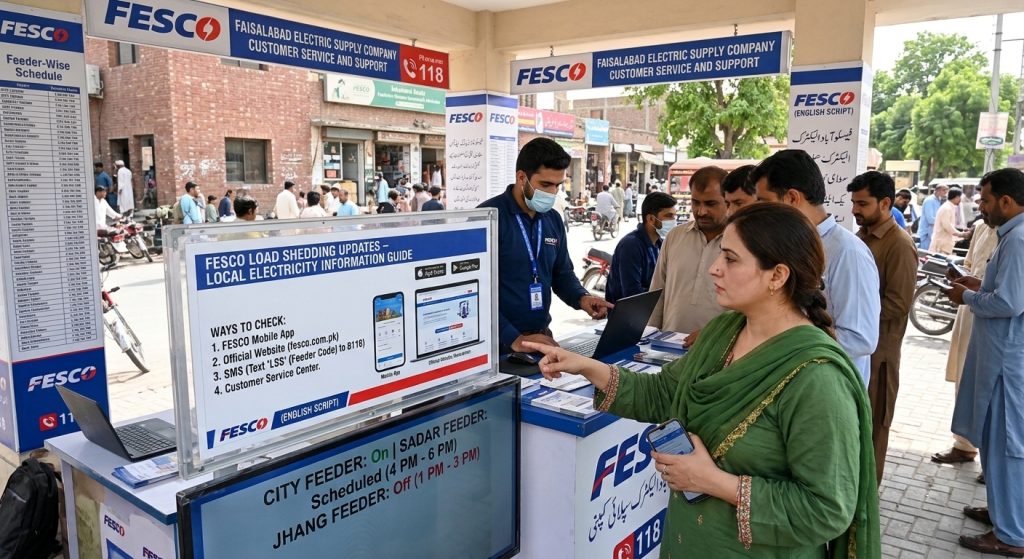
FESCO stands for Faisalabad Electric Supply Company, an electricity distribution company serving Faisalabad and other areas of Punjab.
Load shedding refers to planned or controlled interruptions in electricity supply. Consumers may also experience power shutdowns for maintenance, equipment repairs, or unexpected technical problems.
FESCO provides customer-service resources that include load management schedules, consumer-wise load shedding schedules, and shutdown schedules. You can find these resources on the official FESCO Customer Services page. <Cite refs={[“turn344703search0”]}/>
Checking the relevant schedule can help you understand whether an interruption is planned or whether you need to report a possible fault.
How to Check FESCO Load Shedding Updates Online
Follow these steps to find electricity information for your area.
Step 1: Visit the Official FESCO Website
Open the official FESCO website in your browser.
Look for the Customer Services section. According to FESCO’s listed services, this section includes load management and shutdown schedule resources.
Step 2: Open the Load Management Schedule
Visit the FESCO Customer Services page and look for the available options related to:
- Load Management Schedule by FESCO
- Consumer Wise Load Shedding Schedule
- Shutdown Schedules
These options may help you find the relevant information for your electricity connection. Website layouts and available documents can change, so check the latest information published on the official site.
Step 3: Identify Your Local Feeder
Electricity schedules are often organised by feeder rather than by the name of an entire city. A feeder supplies electricity to a particular network of consumers.
To identify your feeder, check your electricity documents if the information is provided, or contact your local FESCO subdivision office. Keep your reference number or consumer details available when asking for assistance.
Knowing the correct feeder is important because different neighbourhoods within the same city may experience different interruptions.
Step 4: Check the Date and Timing
If a schedule is available, check the date, feeder name, and stated interruption timings.
Make sure the notice applies to your area and the correct date. An old schedule should not be treated as confirmation of a future power cut.
Planned shutdown timings may also change if maintenance work takes longer than expected.
Step 5: Look for New Notices
Check the official FESCO website again if you need an updated schedule. If you cannot find a clear notice, contact the local subdivision or customer service centre and ask whether the interruption is planned.
Do not rely entirely on forwarded messages or unofficial social media posts. Confirm important information through an official source whenever possible.
How to Check Local Electricity Information Without the Internet
You can still seek local electricity information if you do not have an internet connection.
Contact Your FESCO Subdivision Office
Your local subdivision office may be able to explain whether your feeder has a scheduled shutdown or a reported fault.
Provide your area name, reference number, and the approximate time the electricity went off. Ask for the expected restoration time, if known.
Ask About Your Feeder
If you do not know which feeder serves your property, ask the relevant FESCO office to identify it. This can make future schedule checks and complaints easier.
Keep Your Previous Complaint Details
If you have already reported an outage, keep the complaint number and any response you received. These details can help staff follow up on an existing issue rather than treating it as a completely new report.
Difference Between Load Shedding and a Planned Shutdown
Consumers sometimes use the term load shedding for every electricity interruption, but not all outages have the same cause.
| Type of interruption | Meaning |
|---|---|
| Load shedding | A controlled interruption in supply under the applicable load-management arrangements. |
| Planned shutdown | Electricity is temporarily switched off for scheduled maintenance, repairs, or other announced work. |
| Unplanned outage | Electricity is interrupted unexpectedly, often because of a fault or equipment problem. |
| Local transformer fault | A problem affecting a transformer or the nearby distribution network. |
| Emergency interruption | Supply is interrupted to address an urgent safety or technical issue. |
Understanding the difference helps you decide whether to check a published schedule or report a fault.
What to Do During an Unexpected Power Outage
If electricity goes off without warning, follow these steps.
- Check your surroundings: Find out whether nearby homes or businesses are also without electricity.
- Check your main breaker: If the outage appears limited to your property, check your electrical breaker only if it is safe to do so.
- Look for official updates: Visit the FESCO Customer Services page or contact the relevant office.
- Report the problem: If the outage appears to affect the local network, report it to FESCO and provide your area and feeder details if available.
- Keep a record: Note the time the power went off and your complaint reference number.
- Follow safety precautions: Stay away from fallen wires, damaged equipment, or electrical sparks. Report dangerous conditions to the relevant authorities.
Never touch fallen wires or attempt to repair distribution equipment yourself.
How to Report a FESCO Electricity Complaint
If the power interruption continues or appears to be caused by a technical fault, contact FESCO through its official customer-service channels.
When reporting the problem, provide:
- Your name and service area.
- Your electricity reference number, if requested.
- The feeder or subdivision name, if known.
- The approximate time the outage started.
- Whether nearby properties are also affected.
- Details of any visible electrical damage, without approaching it.
Ask for a complaint or tracking number where available. If the interruption remains unresolved, follow up with the relevant office and consult the official complaint options provided by FESCO or the National Electric Power Regulatory Authority (NEPRA).
Tips for Staying Prepared During Load Shedding
A few simple preparations can make electricity interruptions easier to manage.
- Keep rechargeable lights and power banks charged.
- Save important work before a possible interruption.
- Unplug sensitive electronics when appropriate and use suitable surge protection.
- Keep drinking water and essential supplies accessible if your home depends on electric pumps.
- Plan charging and other electricity-dependent tasks around confirmed schedules when possible.
- Avoid using generators or fuel-burning equipment indoors because of the risk of carbon monoxide poisoning.
Businesses may also benefit from a backup power plan and a way to protect computers, routers, and other essential equipment.
Frequently Asked Questions
Where can I check FESCO load shedding updates?
Visit the official FESCO Customer Services page and look for load management, consumer-wise load shedding, and shutdown schedule options.
Can I check the schedule for my specific area?
Look for a consumer-wise or feeder-wise schedule if one is available. If you cannot identify your feeder or find a matching entry, contact your local FESCO subdivision office.
Why is electricity off when no shutdown is listed?
The interruption may be caused by an unexpected fault, emergency work, or an update that is not yet reflected in the schedule. Contact FESCO to confirm the reason and ask about restoration.
Are load shedding timings the same across every FESCO area?
Not necessarily. Schedules can vary by feeder, location, and current operating conditions. Always check the information relevant to your own connection.
What should I do if the outage lasts longer than expected?
Contact FESCO and report the interruption. Provide your location, feeder details if known, and the time the outage began. Keep any complaint number for follow-up.
Conclusion
Checking FESCO Load Shedding Updates can help you prepare for planned interruptions and understand local electricity conditions. Start with the official FESCO Customer Services page, look for load management or shutdown schedules, and identify the feeder serving your area.
If the published information does not explain an outage, contact your local FESCO office and report the problem. Use current official notices rather than assuming that an old schedule or an unofficial message reflects the latest situation.